Heimtextil Frankfurt 2027: Exhibition Stand Design & Build Guide for International Exhibitors
Textile exhibitions are highly sensory environments.
Visitors want to see colour accurately, touch surfaces, compare textures, examine weave quality, understand applications and explore complete collections.
That makes exhibition design at Heimtextil Frankfurt 2027 different from a typical corporate trade fair.
Heimtextil takes place from 12–15 January 2027 at Messe Frankfurt, bringing together the global home and contract textiles industry at the beginning of the international buying season.
For exhibitors, the stand often needs to perform several functions simultaneously:
present large textile collections;
communicate brand identity;
make materials easy to touch and compare;
inspire architects and interior designers;
accommodate buyers;
support private-label discussions;
provide hospitality and meeting space.
The stand therefore becomes both a material library and a brand environment.
Why Heimtextil Matters
Heimtextil is one of the largest international meeting points for textile sourcing and interior design.
The 2026 edition brought together around 3,000 exhibitors and more than 48,000 buyers, with participants from 148 nations. Messe Frankfurt reported an exhibitor internationality rate of 96% and visitor internationality of 86%, while 78% of visitors were top-level decision-makers.
The fair covers a remarkably broad range of products, including:
bed and bath textiles;
decorative cushions and home accessories;
curtains;
upholstery fabrics;
wallpapers;
floor coverings;
carpets and rugs;
mattresses and sleep systems;
textile design;
fibres and yarns;
contract textiles.
For exhibitors, this creates a very competitive visual environment.
Your stand needs to make it immediately clear:
What type of textile product do you provide?
What makes the collection distinctive?
Who is it designed for?
Let the Material Become the Stand
Textile companies have an advantage that many technology companies do not:
the product itself can become part of the architecture.
Instead of displaying every fabric only as a sample, textiles can be incorporated into:
wall treatments;
suspended panels;
ceilings;
curtains;
illuminated lightboxes;
acoustic elements;
furniture;
partitions;
soft architectural forms.
This allows the stand to demonstrate the product at a larger scale.
A visitor does not simply see the fabric.
They experience how it behaves inside an interior environment.
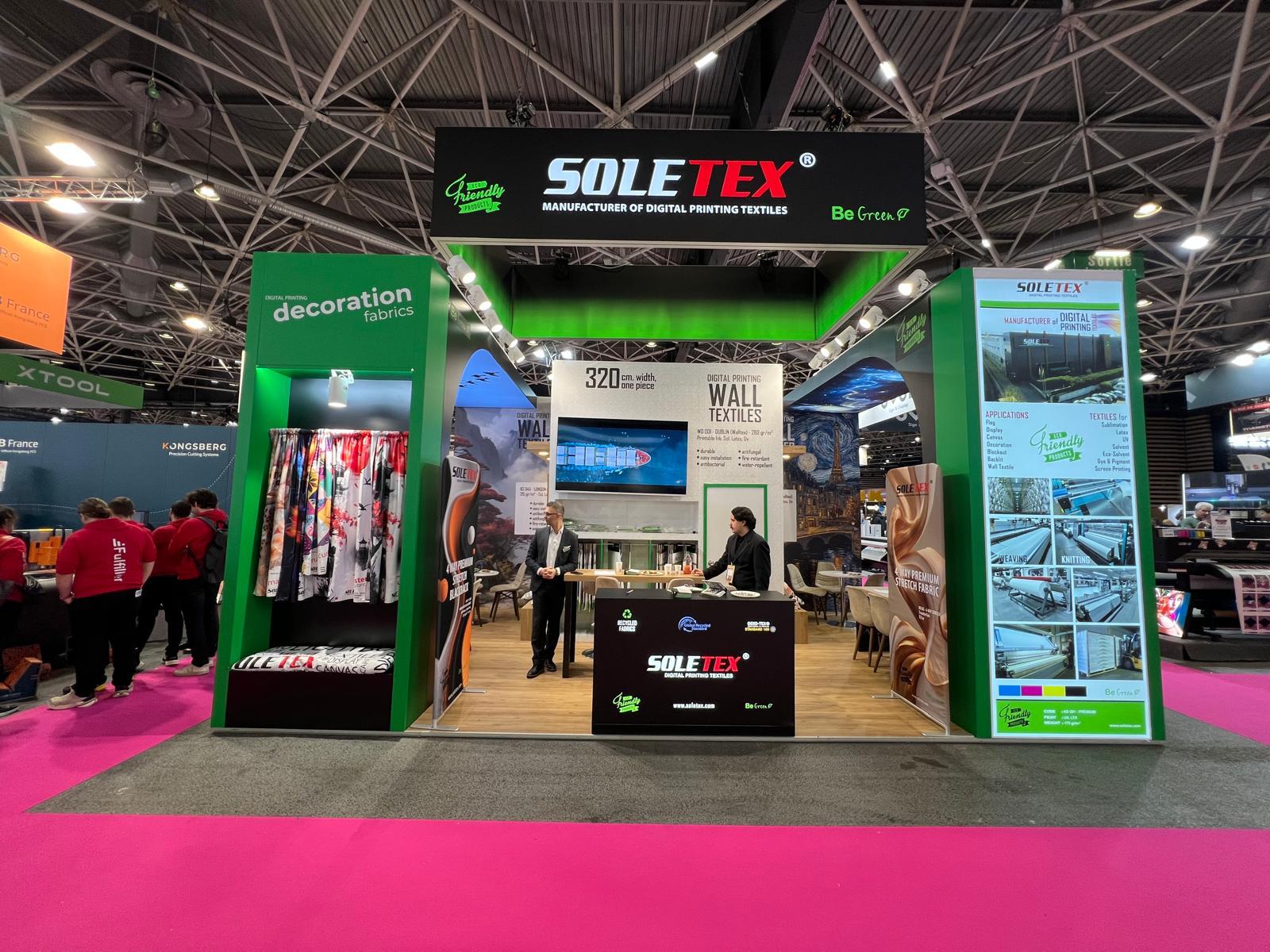
This principle worked particularly well in Maher Design's SOLETEX at Sign Istanbul 2026 project, where oversized printed textiles, wall fabrics and decorative material zones were integrated directly into the 164 m² stand architecture.
Build a Material Library That Is Easy to Browse
Many Heimtextil exhibitors bring hundreds of:
colours;
patterns;
textures;
collections;
fabric qualities;
SKUs.
Trying to display everything equally can quickly make the booth feel crowded.
Instead, create an organized sample system.
Possible solutions include:
hanging fabric libraries;
pull-out sample drawers;
vertical textile panels;
rotating displays;
swatch walls;
collection tables;
book-style sample systems;
illuminated shelves.
The aim is simple:
A buyer should be able to move through your collection without needing assistance for every sample.
Create Clear Collection Hierarchy
If your company has a large catalogue, establish visual priority.
For example:
New Collection
Products launched for the new season.
Hero Collection
The range you most want buyers to remember.
Contract & Hospitality
Textiles aimed at architects, hotels and commercial interiors.
Core Range
The broader catalogue available for sourcing.
Private Label
Products and capabilities for retailers and volume buyers.
This gives both visitors and sales staff a clear structure.
Lighting Is Part of Product Presentation
Lighting is particularly important for textiles.
Colour and texture can appear dramatically different under poor illumination.
A fabric that looks premium in your showroom may look flat under cold or uneven trade-fair lighting.
Consider:
colour temperature;
colour-rendering quality;
directional light;
shadow control;
backlighting;
glare.
For fabrics, rugs and wall coverings, lighting should reveal:
texture;
surface depth;
weave;
sheen;
print quality;
colour accuracy.
If buyers are making collection or sourcing decisions, accurate visual presentation matters.
Give Visitors Permission to Touch
Textiles are tactile products.
The stand should encourage interaction rather than creating barriers between the visitor and the material.
Samples should generally be positioned where visitors can comfortably:
touch them;
lift them;
compare them;
combine colours;
inspect both sides.
A beautiful fabric positioned behind glass may look premium, but it removes one of the strongest reasons for exhibiting the physical product.
Reserve protected displays for particularly delicate or valuable pieces.
Show Textile Applications
A loose fabric sample does not always communicate its full potential.
Where possible, show products as:
curtains;
upholstery;
bedding;
cushions;
wall coverings;
flooring;
hospitality textiles;
contract applications.
This gives buyers and interior professionals context.
For example, a decorative textile can become a full-height wall installation.
A contract fabric can appear on an actual chair.
A curtain material can be shown in a floor-to-ceiling application.
The stand becomes a live application catalogue.
Home Textiles Need Lifestyle Context
For companies selling:
bedding;
towels;
bath textiles;
kitchen linen;
cushions;
table linen;
lifestyle presentation can be particularly effective.
A carefully designed bedroom, hospitality suite or living environment can communicate a complete collection more effectively than rows of folded products.
But avoid turning the booth into a furniture showroom.
The textile should still remain the hero.
Carpets and Rugs Need Space
Heimtextil 2027 is further strengthening its Carpets & Rugs segment, including a new premium “Carpets & Rugs Excellence” format for selected volume manufacturers. The organizer describes carpets as one of Heimtextil's strongest product pillars.
Carpet exhibitors need to consider:
viewing distance;
hanging displays;
rolled storage;
floor installations;
sample access;
lighting;
circulation.
Large rugs may need full display areas rather than small samples.
For carpet brands, the floor itself can become part of the presentation.
Hospitality and Contract Textiles Need a Different Approach
Heimtextil also has strong relevance for architects, hospitality buyers and contract furnishing professionals.
These visitors may be evaluating textiles for:
hotels;
restaurants;
offices;
healthcare;
public buildings;
commercial interiors.
For contract-oriented exhibitors, the stand should communicate more than style.
Useful information may include:
durability;
fire performance;
acoustic performance;
stain resistance;
certifications;
sustainability;
customisation.
A specification table where architects can compare samples can be particularly effective.
Sustainability Needs Proof
The textile industry is under increasing pressure around:
material sourcing;
recycled content;
water use;
chemical processes;
production transparency;
circularity.
If sustainability is genuinely part of your offer, make it easy to understand.
Useful communication includes:
recycled percentage;
certified fibres;
production standards;
traceability;
water reduction;
waste reduction;
take-back programmes.
Avoid filling the booth with generic leaves and green slogans.
At a professional textile fair, measurable information is more credible.
AI, Design and New Materials
Heimtextil has increasingly positioned itself around the intersection of design, technology and responsibility. The 2026 programme gave particular attention to AI and new materials, while the 2027 fair continues its focus on textile trends, design innovation and future-facing interior solutions.
For textile-design companies, technology can be integrated through:
digital collection browsers;
pattern configurators;
colour customisation;
CAD/CAM demonstrations;
large digital moodboards;
application visualisations.
The screen should complement the physical fabric, not replace it.
Build Meeting Space Around Sampling
Heimtextil is fundamentally a sourcing and business event.
Buyers may be discussing:
quantities;
pricing;
private-label programmes;
distribution;
collection exclusivity;
custom production;
hospitality projects.
Meeting spaces should therefore be integrated close to product samples.
A useful arrangement is:
browse → select → compare → sit down → discuss
This creates a natural commercial journey.
For larger stands, consider:
consultation tables;
open meeting areas;
private meeting rooms;
hospitality;
sample storage close to the sales area.
Storage Is More Important Than It Looks
Textile exhibitors often underestimate storage.
During the event, staff may need access to:
replacement samples;
catalogues;
fabric books;
product stock;
bags;
beverages;
personal items.
Without adequate storage, these materials quickly appear in visitor-facing areas.
Storage should therefore be planned from the beginning rather than added later.
What Should You Send Your Stand Builder?
Before starting the design, prepare:
stand dimensions;
hall and booth number;
number of open sides;
official floor plan;
product categories;
collection structure;
sample dimensions;
hanging requirements;
rug/carpet dimensions;
meeting capacity;
storage requirements;
hospitality needs;
screen requirements;
brand guidelines;
sustainability information;
previous exhibition references;
approximate budget.
If your own fabrics will be integrated into the architecture, send physical samples or accurate specifications early.
Why Work With a Turnkey Exhibition Partner in Europe?
International textile exhibitors already need to coordinate:
collections;
samples;
staff;
catalogues;
buyers;
appointments;
shipment.
A turnkey exhibition partner can manage the stand separately.
Maher Design supports exhibitors across Europe with:
concept design;
technical development;
fabrication;
textile graphics;
display systems;
custom furniture;
lighting;
AV;
logistics;
installation;
on-site supervision;
dismantling.
That allows your team to focus on customers and collections while the physical environment is managed as one coordinated project.
Exhibiting at Heimtextil Frankfurt 2027?
Share your stand dimensions, textile collections, material-display requirements, meeting needs and design references with our team.
We can develop a bespoke exhibition environment around your products and manage production and installation in Europe.
When Should You Start Planning?
Heimtextil 2027 takes place from 12–15 January 2027 at Messe Frankfurt. Visitor hours are currently listed as 09:00–18:00 from Tuesday through Thursday, and 09:00–17:00 on Friday.
Because the fair opens immediately after the New Year period, exhibitors should avoid leaving design or fabrication decisions until December.
August–September 2026 — Brief & Concept
Confirm:
stand allocation;
contractor;
product collections;
sample volumes;
architecture;
meeting requirements;
budget.
September–October — Design Development
Finalize:
material displays;
sample libraries;
lighting;
collection hierarchy;
meeting spaces;
hospitality;
graphics.
October–November — Technical Development & Production
Complete:
drawings;
custom display systems;
joinery;
lighting details;
graphics;
furniture;
fabrication.
December — Logistics & Final Coordination
Finalize:
sample shipping;
product lists;
AV content;
furniture;
installation sequence.
Avoid relying heavily on the final holiday weeks for major production decisions.
January — Installation & Handover
Complete the stand, install textiles and collections, adjust lighting and finish merchandising before the show opens.
Official Messe Frankfurt exhibitor documentation should remain the final reference for technical rules, build-up and service deadlines.
About Messe Frankfurt
Heimtextil occupies the Messe Frankfurt exhibition grounds and uses multiple halls across the venue. Messe Frankfurt provides access through entrances including Torhaus, City, Portalhaus and Galeria.
The fair's product structure includes dedicated areas for:
Bed, Bath & Living;
Interior Design Concepts: Window, Wall & Floor;
Smart Bedding;
Textile Design;
Carpets & Rugs;
Global Home;
fibres and yarns.
Your stand concept should therefore consider the specific visual environment and visitor profile of your assigned hall.
What Makes a Strong Heimtextil Stand?
For this fair, I would prioritize seven things.
1. Material-Led Architecture
Allow the textile itself to shape the stand.
2. Excellent Sample Organization
Make large collections easy to browse.
3. Accurate Lighting
Colour and texture need to look correct.
4. Application-Based Presentation
Show how fabrics work in real interiors.
5. Tactile Interaction
Visitors should be able to touch and compare.
6. Strong Buyer Meeting Areas
Move naturally from product selection to commercial discussion.
7. Strong Brand Recognition
Even highly material-driven stands still need to be identifiable from the aisle.
Exhibition Stand Design & Build for Heimtextil 2027
Maher Design creates bespoke exhibition environments for international companies participating in European trade fairs.
For textile-sector exhibitors, we can develop stands around:
home textiles;
technical textiles;
fabrics;
wall textiles;
decorative materials;
bedding;
rugs and carpets;
contract textiles;
print applications;
material libraries;
collection presentation;
buyer meetings.
Our team manages projects from concept and technical development through production, installation, on-site support and dismantling.
The objective is to create an environment where visitors can experience the textile properly while the stand remains organized, distinctive and commercially effective.
Planning Your Stand for Heimtextil Frankfurt 2027?
Whether you manufacture fabrics, bedding, rugs, decorative textiles, contract materials or textile-design collections, Maher Design can develop your stand around the way buyers need to experience your products.
Send us your floor plan, collection information and project requirements.