LIGNA Hannover 2027: Exhibition Stand Design & Build Guide for International Exhibitors
Woodworking exhibitions combine machinery, material and craftsmanship in one environment.
Companies may need to present:
CNC machinery;
sawmill systems;
edge-processing equipment;
furniture-production machinery;
surface technology;
automation;
robotics;
timber products;
wood-based panels;
forestry technologies;
tools and components.
At LIGNA Hannover 2027, the exhibition stand therefore needs to support both technical demonstration and product storytelling.
LIGNA takes place from 10–14 May 2027 at the Hannover Exhibition Grounds. The organizer describes it as the world’s leading trade fair for woodworking and wood processing, covering the complete value chain from primary wood processing through industrial furniture production, automation, surface technology, forestry and energy from wood.
For exhibitors, the stand needs to answer quickly:
What part of the woodworking process do you serve?
What technology are you demonstrating?
What makes your system more productive, efficient or flexible?
Why LIGNA 2027 Matters
LIGNA remains one of the industry’s most international business platforms.
The organizer currently highlights:
1,400 exhibitors
80,000 professional visitors
97% trade visitors
58% international visitors
150+ nations represented
approximately 114,000 m² exhibition area.
That audience includes:
woodworking manufacturers;
furniture producers;
timber companies;
sawmills;
joinery businesses;
forestry companies;
architects;
distributors;
production managers;
technical buyers.
This makes the fair especially valuable for exhibitors selling high-value machinery and production systems.
Machinery Should Drive the Architecture
For machinery exhibitors, stand planning should begin with the equipment.
Before designing the architecture, define:
machine footprint;
operating area;
service access;
loading route;
electrical requirements;
compressed air;
extraction;
demonstration clearances;
safety zones.
Once those requirements are fixed, the architecture can be designed around them.
Trying to fit large equipment into a decorative booth concept later usually creates compromises.
At LIGNA, the machine is often the hero.
The stand should frame it, not fight it.
Live Demonstrations Are a Major Advantage
LIGNA’s exhibitor information specifically emphasizes live machine demonstrations as one of the reasons companies participate.
A working machine creates:
movement;
sound;
visitor attention;
immediate proof of capability.
But it also requires careful planning.
A demonstration zone should consider:
visitor viewing distance;
safety barriers;
operator access;
extraction;
waste handling;
noise;
power;
material supply.
For larger machines, allow visitors to watch without blocking aisle circulation.
Explain the Production Workflow
Many LIGNA exhibitors sell only one part of a larger manufacturing process.
The stand should explain where that technology fits.
For example:
raw material → cutting → machining → edge processing → finishing → assembly
This can be communicated with:
floor graphics;
diagrams;
screens;
illuminated process lines;
sample sequences.
Visitors should understand the role of your technology even if they do not watch a full demonstration.
CNC and Automation Need Digital Support
Modern woodworking increasingly combines machinery with software and automation.
Exhibitors may present:
CNC control;
robotics;
production optimization;
nesting;
digital twins;
machine monitoring;
automated material handling.
Use screens strategically to show what cannot be seen physically.
For example:
production dashboards;
machine data;
workflow simulation;
optimization software;
remote monitoring.
Do not add screens everywhere.
Each digital element should have a clear role.
Product Samples Should Prove Machine Capability
A woodworking machine becomes more credible when visitors can see the finished result.
Display:
machined panels;
edge details;
joints;
surfaces;
profiles;
furniture components.
These samples should be positioned close to the machine that produced them.
This creates a simple story:
machine → process → result
which makes technical capability easier to understand.
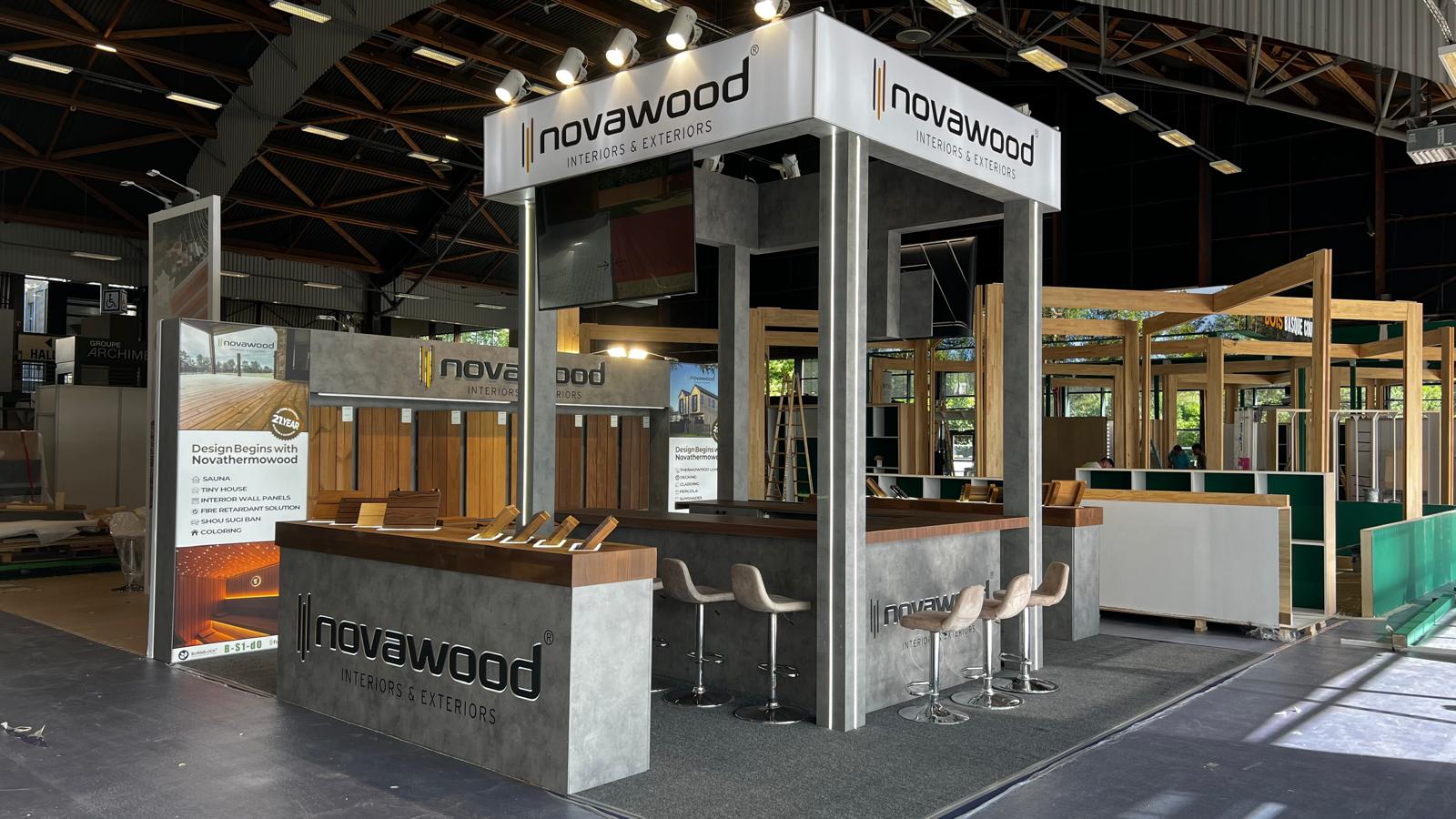
Timber and Panel Exhibitors Need Material-Led Design
Not every LIGNA exhibitor is a machinery company.
Timber, panel and wood-product companies should use the material itself as part of the architecture.
Consider:
timber walls;
panel systems;
ceiling slats;
façade elements;
furniture;
sample libraries.
The stand becomes a full-scale demonstration of the material.
This is particularly effective for companies selling:
engineered wood;
decorative panels;
veneers;
timber systems;
surface materials.
Surface Technology Needs Excellent Lighting
Surface quality is highly dependent on lighting.
Poor lighting can hide:
grain;
texture;
gloss;
coating quality;
colour;
edge finish.
Use:
directional light;
grazing light;
high colour-rendering fixtures;
controlled glare.
If a visitor is comparing surface finishes, lighting becomes part of the product presentation.
Automation and Robotics Should Be Visible
LIGNA covers machine components and automation technology across the woodworking chain.
Robotics is especially effective when shown live.
Useful demonstrations include:
robotic handling;
automated loading;
palletizing;
panel movement;
sorting.
Movement creates attention, but the visitor should also be able to understand the business benefit.
Pair the demonstration with simple information such as:
cycle time;
labor reduction;
throughput;
accuracy.
Forestry and Sawmill Exhibitors Need Space
LIGNA also includes machinery and systems for forestry and sawmill technology.
These exhibitors may have:
larger equipment;
rugged components;
blades;
conveyors;
log-processing machinery.
Their stands should prioritize:
accessibility;
safe viewing;
product scale;
technical discussion.
Over-decoration usually adds little value.
Sustainability Should Be Concrete
Wood is naturally associated with sustainability, but that does not mean broad green messaging is enough.
Communicate specific evidence around:
resource efficiency;
material yield;
waste reduction;
energy recovery;
dust management;
circularity;
renewable raw materials.
For machinery companies, productivity improvements can also have environmental value.
For example:
less waste per panel
or
lower energy use per production cycle
is more credible than generic sustainability claims.
LIGNA.Builds Creates an Important 2027 Context
The organizer is introducing LIGNA.Builds, where a timber-frame house will be built live over the five days of the fair.
This reinforces the importance of:
timber construction;
prefabrication;
integrated workflows;
real application.
For companies connected to timber building systems, this makes application-based display particularly relevant in 2027.
Meeting Space Still Matters
Despite its machinery focus, LIGNA is highly commercial.
The organizer reports a 97% trade-visitor share, indicating that visitors are primarily attending for professional business purposes.
Exhibitors therefore need areas for:
technical discussion;
pricing;
distribution;
production-line planning;
partnership conversations.
Depending on booth size, provide:
standing counters;
open tables;
semi-private seating;
enclosed meeting rooms.
For large machinery stands, meeting space should be separated from noisy demonstration zones.
Storage and Technical Back-of-House
Machinery stands often need more back-of-house space than expected.
Consider storage for:
tools;
consumables;
sample materials;
spare components;
staff items;
brochures.
Technicians may also need a hidden service area.
Without proper storage, technical equipment can quickly make the visitor-facing stand look cluttered.
What Should You Send Your Stand Builder?
Before design begins, prepare:
stand dimensions;
hall and booth number;
number of open sides;
machine dimensions;
machine weights;
technical utilities;
demonstration requirements;
extraction requirements;
safety clearances;
sample displays;
screen requirements;
meeting capacity;
storage;
brand guidelines;
previous exhibition photos;
approximate project budget.
For machinery-heavy stands, accurate technical information is essential.
Why Work With a Turnkey Exhibition Partner in Europe?
International LIGNA exhibitors already need to coordinate:
machinery transport;
technicians;
demonstrations;
customer meetings;
sample materials;
production schedules.
A turnkey exhibition partner can manage the physical stand separately.
Maher Design supports European exhibition projects with:
concept design;
technical development;
fabrication;
machinery integration;
material displays;
graphics;
AV;
logistics;
installation;
on-site supervision;
dismantling.
This allows the exhibitor to focus on technology and customers while the physical exhibition environment is delivered as one coordinated project.
Exhibiting at LIGNA Hannover 2027?
Share your stand dimensions, machinery, timber products, technical requirements and demonstration needs with our team.
We can develop a bespoke exhibition environment and manage production and installation in Europe.
When Should You Start Planning?
LIGNA 2027 takes place from 10–14 May 2027 and is open 09:00–18:00 daily.
A practical schedule:
November–December 2026 — Brief & Contractor Selection
Confirm:
stand allocation;
machinery;
products;
technical requirements;
budget.
January 2027 — Design Development
Finalize:
architecture;
machine placement;
demonstrations;
product displays;
meetings.
February–March — Technical Development
Complete:
construction drawings;
utilities;
extraction;
safety planning;
graphics;
service orders.
April — Production & Logistics
Fabricate the stand and coordinate machinery shipment.
30 April — Official Build-Up Begins
The organizer currently lists 30 April 2027 as the start of the setup period.
9 May — Stand Completion
The official schedule says stands must be complete by 18:00 on 9 May.
10–14 May — Exhibition
Official LIGNA documents should remain the final authority for technical rules and services.
About Hannover Exhibition Grounds
LIGNA 2027 takes place at:
Messegelände
30521 Hannover, Germany.
The fair covers seven major display categories across the woodworking and wood-processing industry and brings together the full primary and secondary value chain.
Your hall context should influence the design.
A machinery hall needs:
demonstration space;
technical services;
viewing areas.
A timber/material hall may benefit more from:
sample libraries;
material-led architecture;
consultation areas.
What Makes a Strong LIGNA Stand?
For this exhibition, I would prioritize seven things.
1. Machinery First
Plan the equipment before decorative architecture.
2. Live Demonstrations
Let visitors see the technology operating.
3. Process Clarity
Explain where the machine fits in the production chain.
4. Product Samples
Show the results produced by the equipment.
5. Technical Reliability
Utilities, extraction and safety need careful planning.
6. Meeting Space
Support serious investment discussions.
7. Material Authenticity
For timber companies, let the wood itself become part of the stand.
Exhibition Stand Design & Build for LIGNA 2027
Maher Design creates bespoke exhibition stands for international manufacturing, construction-material and machinery companies exhibiting across Europe.
For LIGNA exhibitors, we can develop stands around:
woodworking machinery;
CNC systems;
furniture production;
timber;
wood panels;
surface technology;
robotics;
automation;
sawmill systems;
forestry equipment;
material libraries;
live demonstrations.
Our team manages the project from concept and technical development through production, installation, on-site support and dismantling.
The objective is to create a stand where machinery and materials are easy to demonstrate, understand and discuss commercially.
Planning Your Stand for LIGNA Hannover 2027?
Whether you manufacture woodworking machinery, automation systems, timber products or furniture-production technology, Maher Design can develop your exhibition environment around your technical requirements.
Send us your floor plan, equipment information and project brief.