Introduction
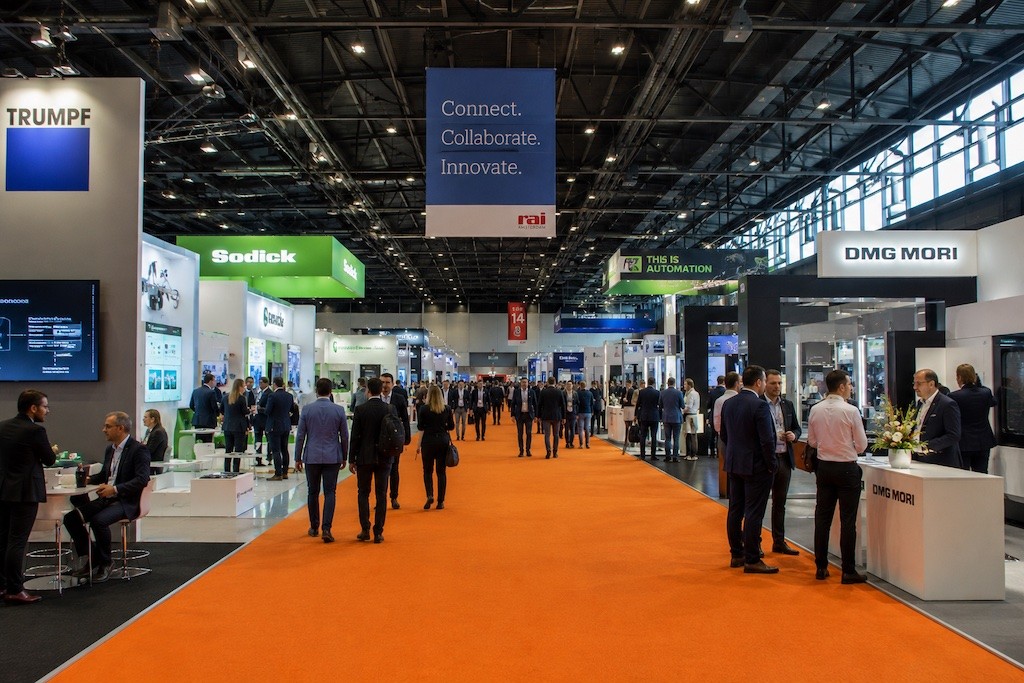
For Turkish manufacturers and exporters, European trade fairs are the most powerful stage to reach new buyers, showcase products, and build international credibility. From K in Düsseldorf to Automechanika in Frankfurt, European fairs attract decision‑makers from across the globe.
But exhibiting outside Turkey comes with unique challenges: unfamiliar regulations, language barriers, higher costs, and the need for a reliable local partner.
The portfolio reflects exhibition projects designed and delivered by the same team now represented by Maher Design under Maher’s leadership, including work at Aluminium 2024 Düsseldorf, Bauma 2025 Munich, BAU 2025 Munich, IFAT 2026 Munich, Intersolar 2025 Munich, Medica 2024 Düsseldorf, CTCO Lyon 2026, and DEİK pavilions across Europe.
This guide shares what we’ve learned.
1. Why European Trade Fairs Matter for Turkish Exporters
Europe accounts for over 50% of Turkish exports. Trade fairs are where deals happen.
Key advantages:
Access to premium buyers– Global procurement managers attend.
Brand elevation– Exhibit alongside industry leaders.
Government support– Many Turkish ministries and chambers of commerce offer grants for national pavilions.
Market intelligence– See what competitors are doing, spot trends, and gather leads.
European fairs represented in the portfolio:
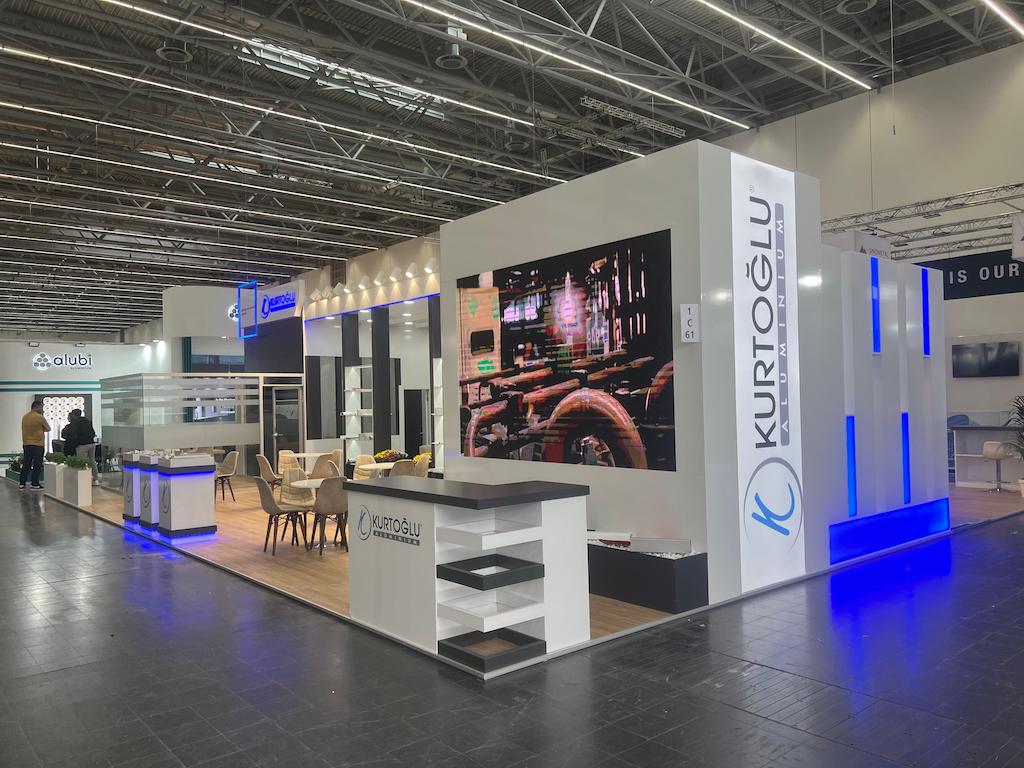
Aluminium 2024 Düsseldorf – Kurtoğlu
Bauma 2025 Munich – Önder Metal, Las Zirh
BAU 2025 Munich – Adler, Lenix, Thrakon, Bonus, Kurtoğlu
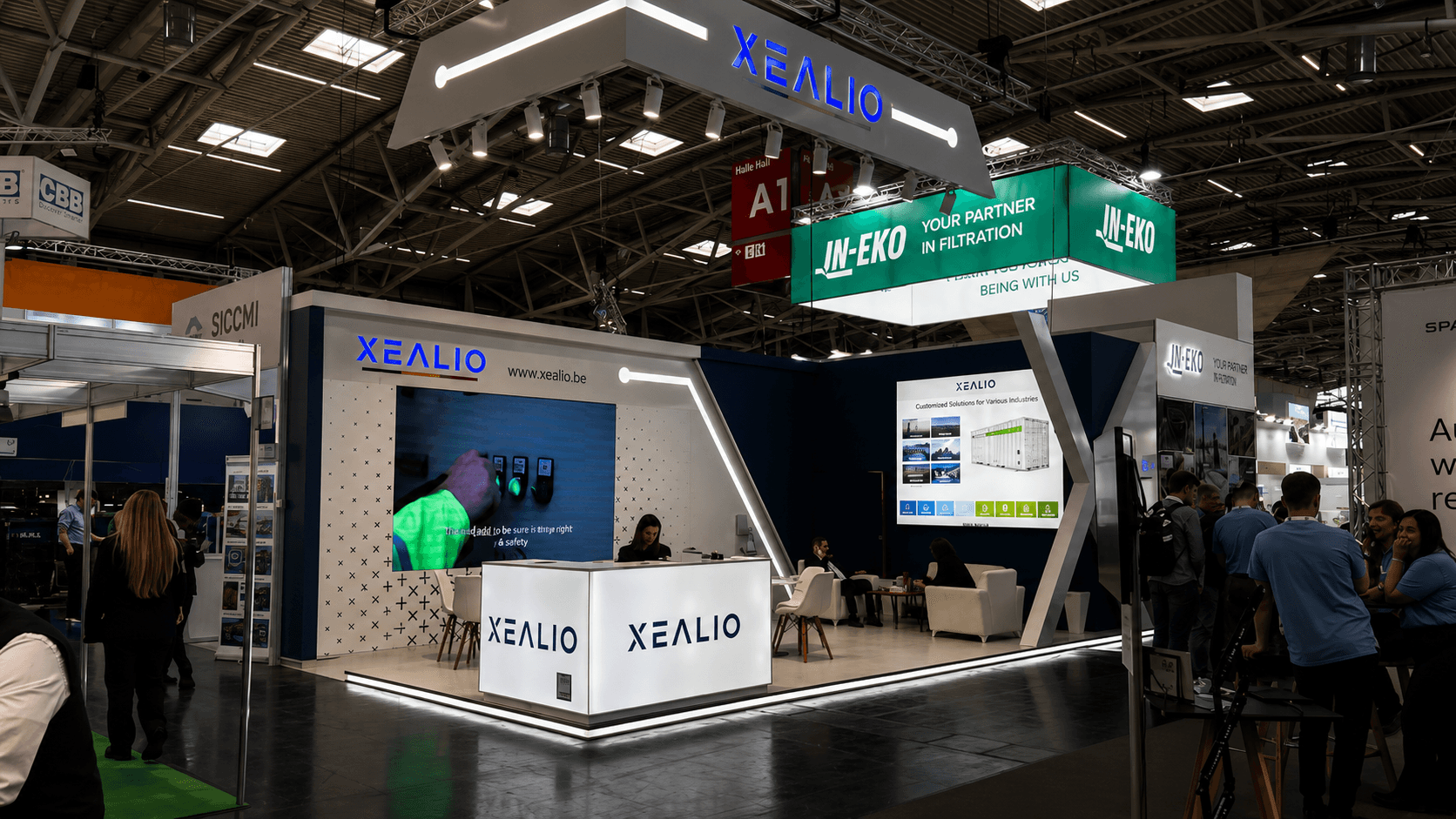
IFAT 2026 Munich – Bortek, Xealio, ASTIM, Turkish Machinery
Intersolar 2025 Munich – Ekos Electric, NLB Solar
Medica 2024 Düsseldorf – KoseMed
Transport Logistics 2025 Munich – DEİK(country pavilion)
WebSummit 2023 & 2024 Lisbon – DEİK(country pavilion)
Money2020 2023 Amsterdam – DEİK(country pavilion)
EAIE Toulouse – DEİK(Study in Türkiye)
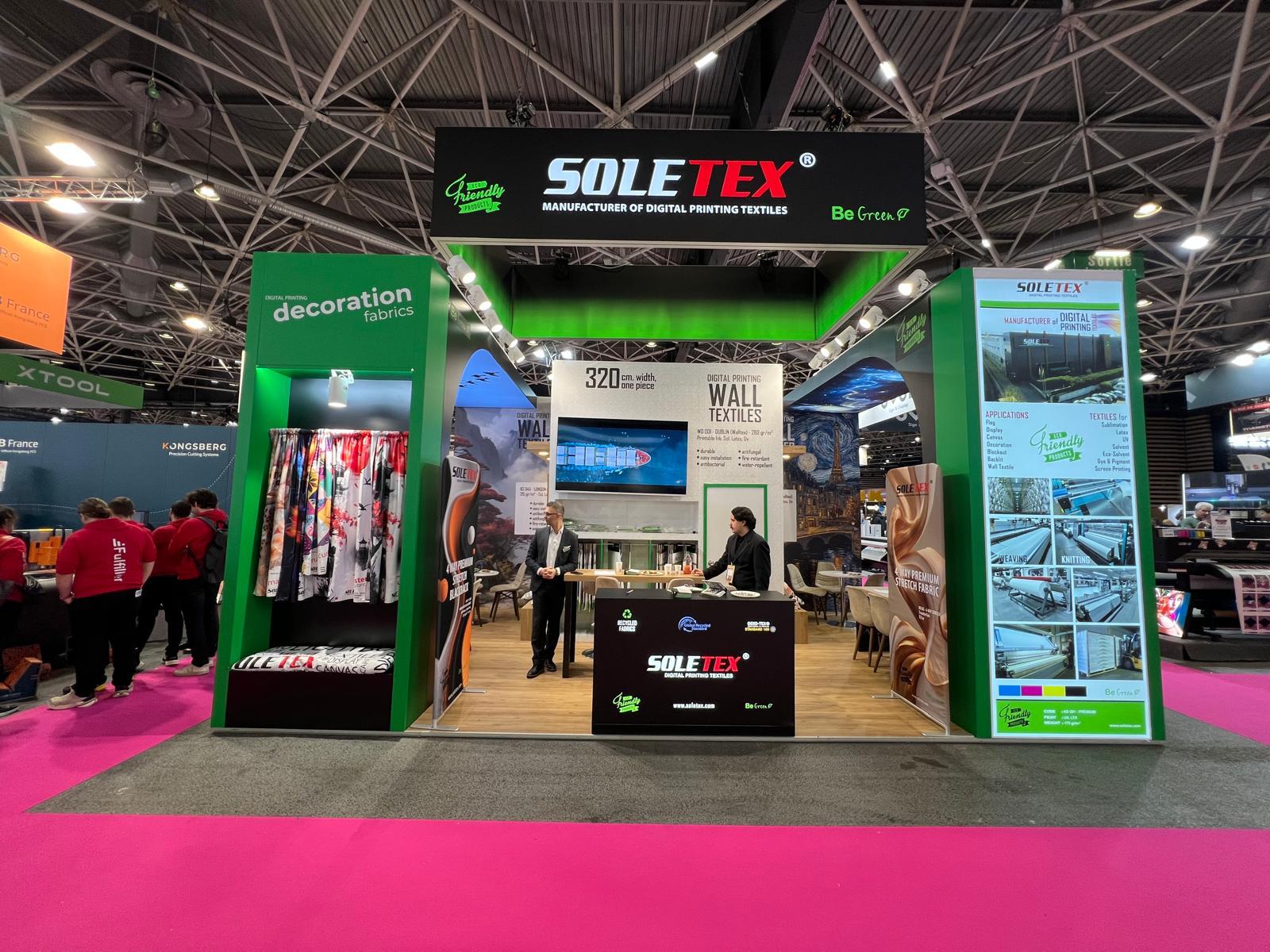
CTCO Lyon 2026 – Soletex, Bilsan
See our full European Exhibitions directory.
2. Shell Scheme vs. Bespoke Stand – Which One Wins?
Perception — “Budget exhibitor”; “Serious global player”
Lead generation — Lower; Significantly higher
Meeting spaces — None or shared; Private, enclosed
Best for — Small budgets; Premium brands, complex products
Real example: Kurtoğluat Aluminium 2024 Düsseldorf invested in a bespoke stand with a production walkway, product display niches, and private meeting rooms. They signed multiple distributor deals on‑site.
Our advice:A bespoke stand signals reliability. Even 20–30 sqm outperforms a 60 sqm shell scheme in lead quality.
3. Finding the Right Stand Builder for European Fairs
Turkish companies have two options: hire a local European builder or work with a Turkish builder who delivers to Europe.
What to look for in a Turkish partner:
Experience at specific venues (Messe Düsseldorf, Messe München, etc.)
Project-specific production planning and coordination
Clear agreed scope for shipping, customs, assembly, and dismantling
References from other Turkish exhibitors
The portfolio includes projects in Düsseldorf, Munich, Hanover, Lyon, Lisbon, Amsterdam, and Toulouse.
Local European builder — Familiar with local rules; Expensive (€500–1,000+/sqm), slow communication
Turkish builder with EU delivery — Cost‑effective, single contact; Requires proven logistics experience
4. Logistics & Carnet for Turkish Exhibitors
Shipping from Turkey to Europe is straightforward if you plan ahead.
Required Documents
Shipping Timeline to Europe
Which European Venues Require Extra Attention?
ATA Carnet — Temporary import of goods (avoid customs duties). Essential for exhibition materials.
Packing list — Detailed list of every item (weight, dimensions, value).
Commercial invoice — For customs valuation (even if goods are temporary).
Carnet counterfoils — Must be stamped at both Turkish exit and European entry.
Review customs requirements, venue rules, and local permits during planning.
5. Timeline for a Bespoke Stand Project in Europe
Contact stand builder — 4–5 months before fair
Finalize design & materials — 10–12 weeks before
Fabrication in Turkey — 6–8 weeks before
Ship from Turkey to EU — 3–4 weeks before
Customs clearance in EU — 1–2 weeks before
On‑site assembly — 2–5 days before opening
Common mistake:Underestimating venue assembly rules. Each German fair has a 100+ page technical manual. Use a builder who already knows them.
6. Budgeting for a European Trade Fair
Costs for Turkish exhibitors in Europe are higher than in Turkey, but ROI can be significantly better.
Approximate Cost per sqm (fully built bespoke)
Messe Düsseldorf — Very strict about electrical safety (VDE certification). Plan ahead.
Messe Frankfurt — Limited assembly windows; overtime fees are high.
Hanover Exhibition Grounds — Massive venue; allow extra time for moving materials from parking to hall.
Paris Nord Villepinte — French customs can be slower; add buffer days.
Costs include design, fabrication, shipping, assembly, and dismantling. Excludes venue electricity, cleaning, and catering.
Example budgets for a Turkish company:
Tip:Many Turkish chambers of commerce offer exhibition grantscovering 30–50% of stand costs. Check with your sector association.
7. Cultural Tips for Turkish Exhibitors in Europe
Small cultural differences can make or break a deal.
16–20 weeks — Initial consultation, budget approval, venue rules reviewed
14–16 weeks — Concept design, 3D renders, material selection
12–14 weeks — Design approval, technical drawings, deposit payment
10–12 weeks — ATA Carnet application, shipping booked
6–10 weeks — Production planning and coordination in Türkiye
4–6 weeks — Packing, loading, shipping to Europe
2–4 weeks — Customs clearance at European port/airport
1 week — Delivery to venue, on‑site assembly
During fair — Daily maintenance, on‑call support
After fair — Dismantling, storage (if needed), or Carnet closure
Pro tip:Hire bilingual booth staff (Turkish + German/English). Buyers feel more comfortable speaking their own language.
8. Common Mistakes Turkish Companies Make in Europe
Using a Turkish stand builder with no European experience– Customs, venue rules, and local permits are complex. A builder who doesn’t know them will cause delays.
Underestimating assembly lead times– German and French halls have strict union rules. Overtime is very expensive.
Not budgeting for electrical certification– Many venues require local electrical safety tests (e.g., VDE in Germany).
Skipping the ATA Carnet– Without it, your materials may be held at customs or you’ll pay hefty duties.
Bringing too much staff– Every extra person means an additional exhibition badge, hotel, and travel cost. Plan lean.
Translating materials at the last minute– German and French buyers expect brochures and signage in their language. Plan translation 2 months ahead.
9. Planning Your European Trade Fair with Maher Design
We are a Turkish stand builder with proven European delivery– not a broker.
Single point of contact– One project manager handles everything from Istanbul to assembly in Düsseldorf.
Production coordination– Production planning, logistics coordination, and installation according to the agreed scope.
Clear scope and budget planning– No hidden fees for customs, overtime, or local permits.
Project-specific logistics coordination– We work with licensed partners in Germany, France, Italy, and the Netherlands.
Proven track record– See our case studies at Aluminium 2024 (Düsseldorf), Medica 2024 (Düsseldorf), BAU 2025 (Munich), and more.
We speak your language (Turkish and English) and understand your budget constraints.
Ready to Conquer European Trade Fairs?
Germany — 350; 500–700; 900+
France — 400; 550–750; 850+
Italy — 350; 500–650; 800+
Netherlands — 380; 520–700; 850+
Whether you are exhibiting at K 2026, Automechanika Frankfurt, or your first fair in Europe, we are here to help.
Request a free consultation– Share your fair, stand size, and budget to begin a project discussion.
Almanya, Fransa, İtalya veya diğer Avrupa ülkelerindeki fuarlar için Türkçe rehbere mi ihtiyacınız var? Bize ulaşın ve gönderelim.
20 sqm — Simple bespoke; 7,000 – 10,000
30 sqm — Mid‑range bespoke (with meeting area); 12,000 – 18,000
50 sqm — Premium bespoke (with AV, lounge); 25,000 – 40,000
100 sqm — Large pavilion (multi‑brand); 60,000 – 100,000+
First contact — A firm handshake, direct eye contact, professional greeting. Avoid overly enthusiastic “brotherly” behavior.
Language — English is fine for most. Germans appreciate a few words of German (“Guten Tag”). French buyers prefer French if you can.
Business cards — Always present with two hands (or right hand). Translate one side into the local language.
Punctuality — Strict. Arrive 10 minutes early. Do not keep a buyer waiting.
Follow‑up — Send an email within 48 hours after the fair. Reference something specific from your conversation.
Closing — Europeans rarely sign on the spot. They will take your proposal, compare it, and decide later. Be patient.